Holiday Preview Sale | up to 50% off
Holiday Preview Sale | up to 50% off

ProfessionalsShowrooms & Dealers
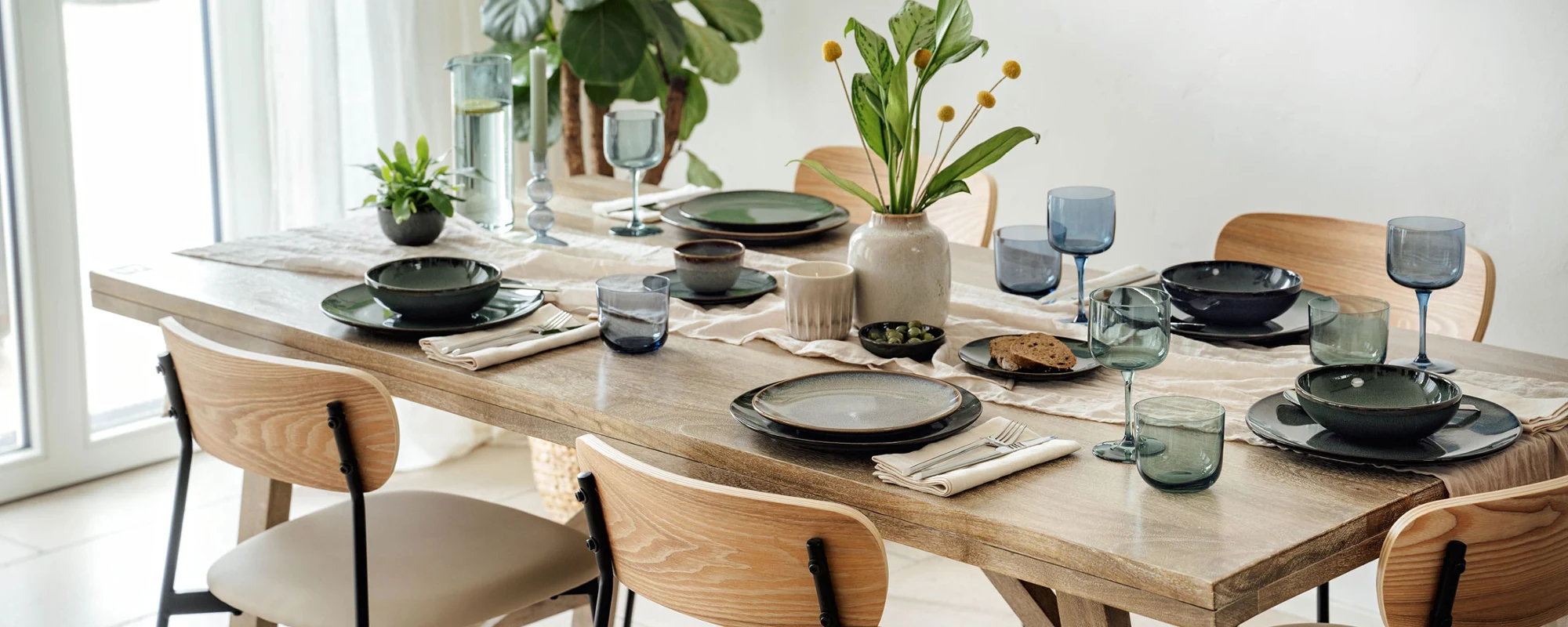
What Is Wabi-Sabi Tableware?

Perfectly matched place settings have their place. But sometimes, the most inviting tables are the ones that feel a little less perfect.
That idea is at the heart of wabi-sabi tableware: dinnerware that celebrates natural textures, organic shapes, subtle variations, and the beauty found in imperfection.
If you’re drawn to earthy ceramics, handcrafted-looking dinnerware and relaxed tablescapes, the wabi-sabi aesthetic may already be influencing the way you set your table; even if you haven’t put a name to it.
Wabi-sabi is a traditional Japanese aesthetic philosophy centered on finding beauty in imperfection, simplicity, and the natural passage of time.
Rather than striving for flawless symmetry or uniformity, wabi-sabi embraces qualities that feel authentic and individual: an irregular edge, a tactile surface, a variation in color, or a shape inspired by nature.
Applied to the table, this philosophy creates spaces that feel collected rather than coordinated, and personal rather than perfect.
Wabi-sabi tableware translates this appreciation for imperfection into the pieces we use every day. Think: organic shapes, matte or tactile finishes, earthy colors, and subtle variations in appearance. Instead of every plate, bowl, and cup looking exactly the same, the beauty comes from how individual pieces work together. The result is a table that feels relaxed, tactile, and lived-in.
And you don’t need to replace your entire dinnerware collection to embrace this trend. A few thoughtfully selected pieces can bring softness and dimension to an existing table setting.
How to Create a Wabi-Sabi Table Setting
1. Start With Texture
Texture is one of the easiest ways to introduce a wabi-sabi feeling to your table. Look for dinnerware with tactile surfaces, matte finishes, or designs inspired by natural materials. Against smooth glasses, linen napkins, and sleek flatware, these textured pieces become even more noticeable.
Think: the Manufacture Rock collection. Manufacture Rock brings the appearance and tactile character of slate to premium porcelain. Its expressive surface can introduce an organic, grounded quality while maintaining the durability and functionality needed for everyday dining.


2. Let Shapes Feel Organic
Not everything on your table needs to be perfectly symmetrical. Bowls with softly-curved silhouettes, serving pieces with unexpected proportions, and accessories influenced by natural forms can make a setting feel more spontaneous. Rather than building a table around strict uniformity, consider how different silhouettes interact.
Think: the Lave collection. The pieces in the Lave collection are perfectly imperfect. They have a hand-crafted pottery look and use a reactive glaze, so no two pieces are alike.

