Host & Gather Sale | up to 50% off

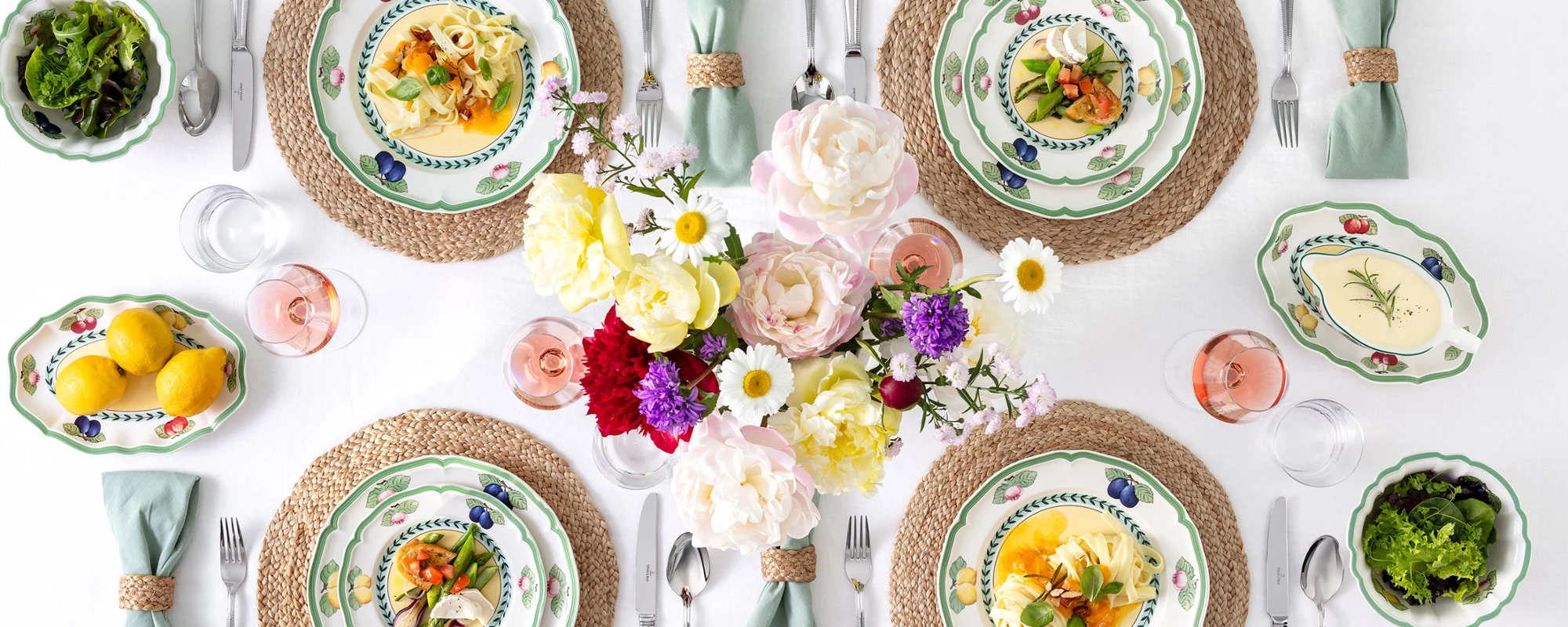
Inside French Garden
The Design Details Behind the 90s Icon
French Garden is instantly recognizable at first glance.
Hand-painted fruit illustrations—lemons, apples, blueberries—sit framed within soft botanical borders that feel lifted from a sunlit orchard in peak summer. Every detail is intentional, designed to evoke warmth, abundance, and the quiet romance of the countryside.
It’s not just decoration. It’s atmosphere.
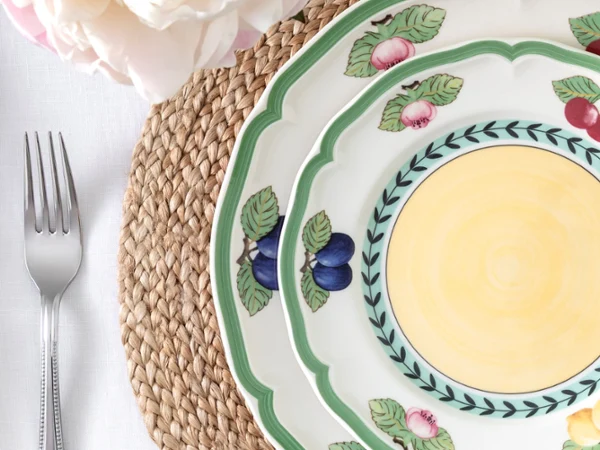
The Color Palette of Warmth
The palette is one of its most defining features.
Soft yellows inspired by citrus and sunlight. Gentle leafy greens drawn from stems and garden foliage. Creamy porcelain tones that ground everything in balance.
Together, they create a table setting that feels bright but never overwhelming—expressive, but still easy to live with.
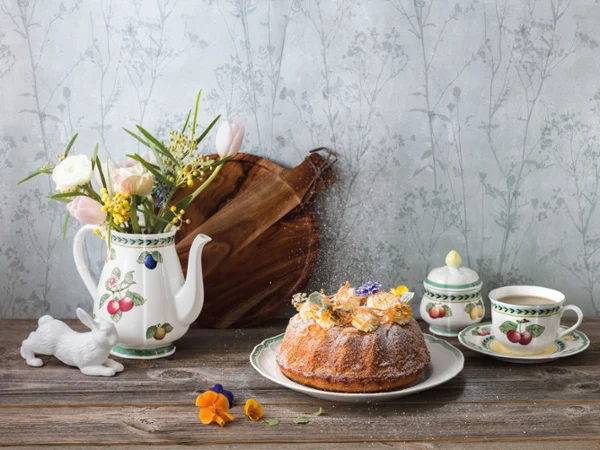
The Balance Between Decorative and Functional
What makes French Garden endure is its duality.
It’s decorative enough to feel special, yet functional enough for everyday use. The gently scalloped porcelain forms feel classic and familiar—designed to move effortlessly from weekday breakfasts to long summer dinners without ever feeling out of place.
It doesn’t demand occasion. It creates it.
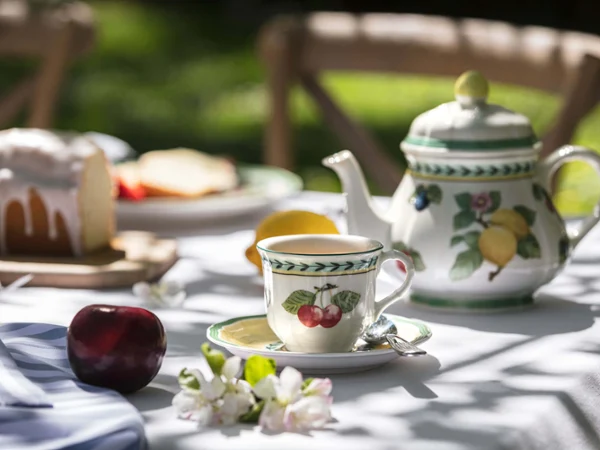
Why the Design Still Works Today
Even in a design landscape dominated by minimalism, French Garden thrives because it offers what minimalism cannot: a narrative.
Every piece tells a visual story of harvest, seasonality, and nature in motion. That storytelling is what keeps it relevant, then and now.
And today, it continues to tap into a deep nostalgia for 1990s kitchen culture: sunny, homey, and full of personality.
When it first launched, French Garden introduced a new kind of warmth to everyday dining—fruit motifs, garden-inspired tones, and a relaxed, lived-in sensibility long before “cottagecore” had a name.
That same spirit still resonates now: a return to expressive, welcoming tables that feel both familiar and enduring.